
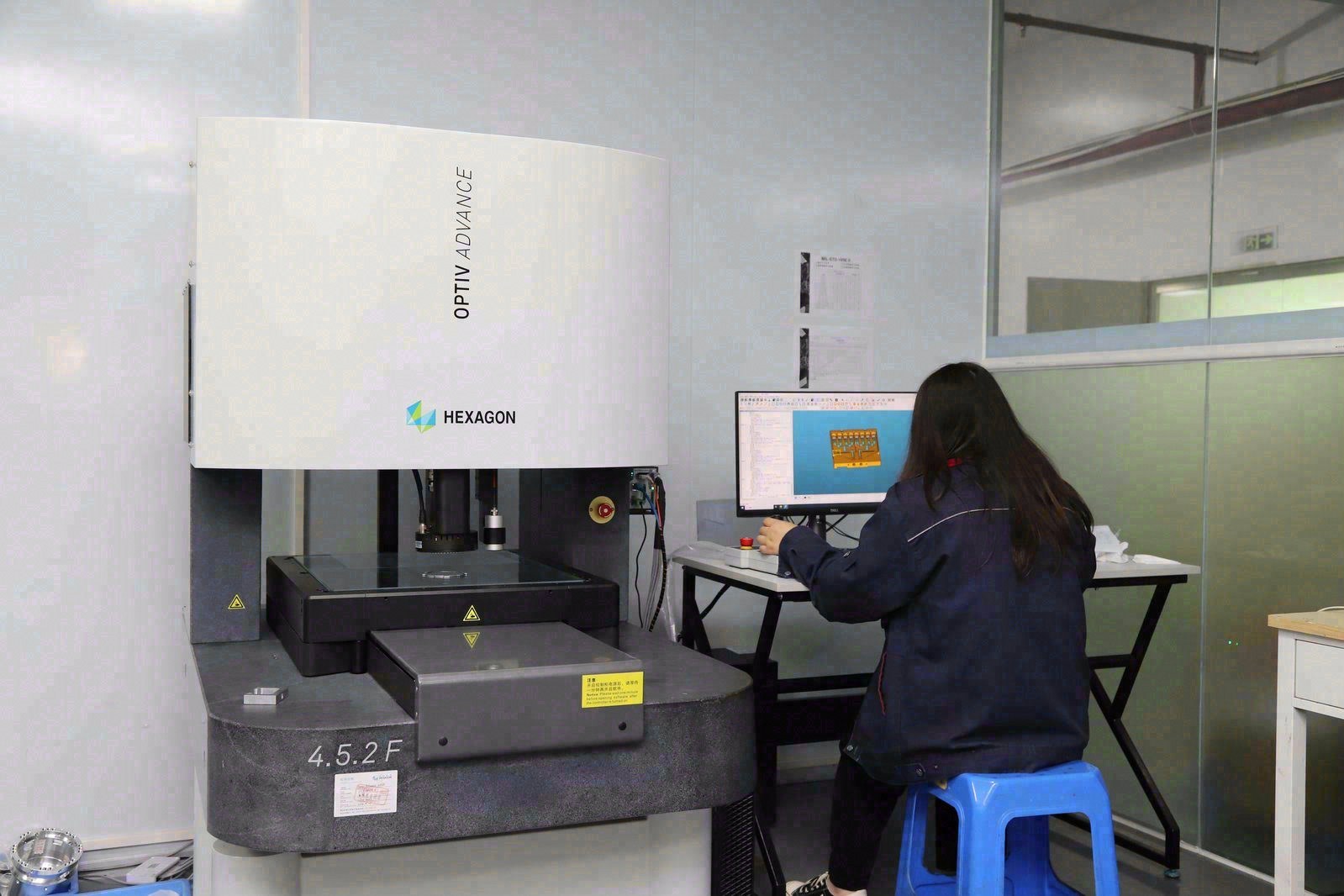
Buying precision machining from China comes down to one discipline: making the money follow the evidence. The supplier sits a hemisphere away, the parts arrive after the payments, and the only protection is a sequence of checks placed between you and each dollar you send. Check the identity of the supplier before the deposit, check the tolerance evidence before the balance, and check the finished lot before the final payment.
- The deposit gate: confirm the entity you pay is the shop behind the quote, with machines and inspection you can see on a live call.
- The tolerance gate: ±0.003 mm on machining and turning, ±0.002 mm on grinding, and capability at Ppk ≥ 1.67 initial should appear in a sample report before you commit.
- The material gate: the grade should be named and the stock verified, with a certificate format agreed for the lot.
- The payment shape: deposit, first article, pre-shipment inspection — each milestone releasing only the next tranche.
Why does verification have to happen before the money moves?
Precision machining is one of the few purchases where the supplier asks for payment before the product exists and the buyer cannot walk across town to inspect the work in progress. That combination — money first, parts later, distance in between — is exactly the situation where verification pays for itself. Every check you run before a payment is insurance against a discovery you would rather make early: the supplier is not what it claimed, the tolerance cannot be held, or the material does not match the certificate.
The checks are cheap in absolute terms. A drawing review costs the supplier an hour of engineering time. A sample first-article report and material certificate arrive in an email. A video walkdown takes fifteen minutes. Against the cost of a rejected production lot, a re-sourced order, or a device that fails because the part was wrong, the verification is nearly free. The buyers who skip the checks are not saving money; they are deferring the cost to a moment when it is much larger.
The payment schedule is the enforcement mechanism. A deposit covers the real starting work — review, programming, material. The next payment lands against the first article that matches the drawing. The balance lands against a lot that passed inspection. A supplier that accepts this shape is pricing its work; one that resists it is asking you to fund its promises. The shape of the payment schedule tells you more about the supplier than the tone of its emails.
How do you confirm the supplier you are paying is the factory that will cut your parts?
The first gate is identity, and it exists because a quoted capability is easy to rent and hard to own. Match the legal name on the quotation and the invoice against the company registration, and confirm the plant address on that registration. Then run a live video walkdown of the shop floor and the inspection room in one continuous call, because a live tour cannot be assembled from stock photos. The name above the door, the machines running, the CMM sitting in its room — those are the things a genuine supplier shows without staging.
Watch the walkdown with the quote in front of you. The machine types and axis counts on the quote should be visible on the floor. The inspection instruments that will produce your reports should be in the room. If the quote promises 5-axis capacity and the floor shows three machines that all look alike, ask which one does what — a real shop answers fluently, a staged tour does not.
Verify the people in the same pass. The person handling your order should be able to discuss the technical content of your drawing or route you to the engineer who can, within a day. A sales desk that deflects every technical question is a sign that the engineering behind the quote is borrowed. On a precision machining order, the engineer who reviews your drawing before the deposit is the person who protects your part after it.
Which tolerance claims deserve written proof before you pay?
A tolerance claim on a quote is a promise about a process, and promises are verified with reports, not with assurances. A serious precision machining shop holds ±0.003 mm on machined and turned features and ±0.002 mm on precision-ground surfaces, with capability at Ppk ≥ 1.67 initial on the characteristics that matter, and it should be able to show you a sample first-article report from a similar job with the instrument identified and the values measured against a datum frame.
Ask for the sample report at the RFQ stage and read it like an auditor. Are the values actual measurements with dates and instrument IDs, or a block of numbers with no witness? Do the datum references match the drawing's frame? Can the report be tied to a specific lot and material heat? The supplier that produces these documents as routine output sends them without hesitation; the one that treats them as a favor is telling you where documentation ranks in its process.
Put the tolerance requirement in the PO in writing. State the drawing revision, the inspection method, and the acceptance criteria — measurement against the drawing's datum reference frame with capability reported where you ask for it. When the contract names these, the first article has a standard to meet and a disagreement has a document to settle it.
What should the drawing review return before you commit to an order?
The drawing review is the supplier's first real work product, and its quality predicts the quality of the order. A serious review names the material and condition the part will run from, the machine class and setups the geometry requires, the features that will be difficult to hold at your quantity, and the questions the drawing leaves open. It flags the tolerance that needs a grinding step, the thin wall that will distort, the datum that will be hard to measure. It asks questions, because every real drawing has some.
Compare the reviews you receive from shortlisted suppliers as carefully as their prices. A review that engages with the geometry is the work of a shop that will engage with the part during production. A one-line confirmation with a price is the work of a quote desk that will discover your part's difficulties at the same moment you do — at the first article. On precision machining, where the process decisions are made in the first setup, the review is the best predictor of the run.
Use the review to correct the drawing before the order rather than after it. If the supplier flags a tolerance that needs a second operation, decide now whether to loosen the feature or accept the operation — both decisions are cheaper at the RFQ stage than at the first article. The buyers who treat the review as a design consultation get parts that are designed for their process, and those are the parts that arrive on schedule and hold their price.
Which quality evidence should exist before the balance payment?
The quality system is the frame around the supplier's process, and it should be verifiable in writing before the balance moves. The supplier should show a quality certificate with a readable scope — ISO 9001:2015 as the baseline, with IATF 16949:2016 (product design excluded) and ISO 14001:2015 where the programs demand them — naming the plant that machines your parts. A certificate for a different entity is decoration, and a scope that cannot be read is a scope that cannot be verified.
Ask for the routine reporting, not the special favors: a first-article report from a recent precision job, a material certificate with a heat number, and a CMM report identifying the instrument. Judge them against your own inspection standards. If the samples are vague, the production lots will be vaguer, because the reports you are shown are the reports the supplier is proud of. The quality page on this site lists the inspection instruments behind our reports and how the data ties to each lot — the specificity to hold any candidate to.
Ask about calibration in the same conversation. A shop claiming ±0.003 mm should name the CMM it measures with and its calibration cycle. Calibration is the quiet detail that makes measurement meaningful, and a supplier that cannot discuss its calibration schedule cannot defend its numbers. The evidence you gather before the balance payment is the evidence that protects the lot after it.
What should the first article prove, and when should you receive it?
The first article is the point where the process stops being a claim and becomes a demonstrated fact. The supplier should deliver a dimensional report measuring the critical features against the drawing's datum reference frame, the material certificate for the stock actually used, and any surface readings the drawing calls out. You should review that package before the production balance moves, because the first article is the sample of the process, not a favor the supplier is doing you.
Review the first article as evidence. Check the measured values against the drawing rather than against the quote. Confirm the datum references match. Look at how the supplier reported any deviations — an honest deviation record is a sign of a process you can trust, and a report with no deviations on a difficult part is a report to question. If the first article holds the quoted tolerance and documents it honestly, you have learned the two things that matter: the process works and the reporting is truthful.
Define the first-article gate before the deposit so there is no negotiation later. State what the FAI must contain, when it will be ready, and what happens if it fails — rework at the supplier's cost or a revised date with notice. The suppliers who accept a defined first-article gate are the ones with real processes; the ones who resist it are protecting the freedom to improvise.
How should payment milestones be structured on a China precision order?
The milestone structure should keep more of the supplier's money at risk than yours at every stage. A workable shape: a deposit that covers the real starting work, then a payment on first-article approval, then the balance against pre-shipment inspection and the shipping documents. If a supplier wants most of the money before you can verify anything, ask why the evidence cannot precede the payment — the answer is usually that the evidence does not exist yet.
Match the mechanism to the order size. Wires are standard but leave limited recourse, which is exactly why the milestones matter. Larger orders may justify a letter of credit or payment against documents; smaller orders get the same protection from a schedule that withholds the balance until inspection passes. Whatever the mechanism, write the schedule into the PO and hold it — the supplier that asks to move a payment early once will ask again, and each early payment is a bet you did not need to place.
Understand what each payment buys. The deposit buys the review, the programming, and the material. The first-article payment buys the proof that the process holds your tolerance. The balance buys a lot that passed inspection. When the money tracks those events, a capable supplier welcomes the schedule because it has nothing to fear from evidence, and a failing supplier cannot hide behind it.
What should the pre-shipment inspection check before the final payment?
The pre-shipment inspection closes the loop the first article opened. A first article proves the process can hold tolerance on one part; the inspection proves the production lot did. The supplier should inspect the finished lot against the drawing and hold the reports, and you should verify the lot before it is packed — a live video inspection of the critical characteristics, or a third-party inspection for larger orders.
Add the simple checks that catch the real problems. Confirm the quantity against the PO. Confirm the material certificates cover the heats actually used, not a neighboring lot. Check the surface finish on sampled parts against the callouts. Watch the parts and the reports together on the video call rather than accepting photographs, because a photograph proves a part existed, not that it measured to tolerance when it shipped.
Agree the non-conformance path before the inspection. If the check finds deviations, the supplier should have a written route — rework, replacement, or a documented deviation you approve — and the cost should sit where the contract puts it. The cost guide on this site walks how inspection and rework risk are priced into quotes, which makes the pre-shipment conversation easier when it happens. At this gate a problem costs days instead of a full lot.
Which red flags should stop you from paying a precision machining supplier?
Name the flags so the verification has teeth. The serious ones: a legal entity that differs from the factory name on the quote; a quality certificate without a readable scope or naming a different address; a quote with no material, tolerance, or finish callouts; payment terms that front-load the money before any inspection evidence; resistance to a live walkdown, a defined first-article gate, or a pre-shipment check; and references that cannot be produced or verified.
Distinguish the negotiable from the pattern. A supplier that hesitates on one technical question may simply need a better engineer in the conversation, and a slow email is not a crime. But two or more of the serious flags together describe a supplier that is avoiding verification, and the usual reason is that the verification would not survive contact with its operation. The flags are the test, and the test is what your deposit is protecting.
Use the gates to find the real shops rather than to eliminate every candidate. The precision machining China market contains genuine factories with real machines and real inspection rooms, and the checks in this guide are exactly how you find them. A supplier that answers every gate with a walkdown, a review, a first article, and a passed inspection has earned the production order; one that meets every question with reassurance has earned another round of questions. Keep the first orders small, make the payments track evidence, and let the first article — not the first quote — decide who machines your production parts.
Frequently Asked Questions
What is the most important check before paying a precision machining supplier in China?
That the entity you pay can actually produce and inspect the parts at the tolerance quoted. Confirm the factory behind the quote with a live walkdown, request a sample first-article report and certificate format, and keep the first payment small enough that the first article is what qualifies the supplier.
How do I know a China precision machining supplier is a factory and not a broker?
Match the legal entity on the contract to the company registration and plant address, and watch a live video walkdown that includes the machines and the inspection instruments the quote relies on. A broker can rent a factory tour once; a real factory walks you through its own floor.
Which quality evidence should I request before paying?
A quality system certificate with a readable scope naming the plant, a sample first-article report tied to the drawing datum frame, a sample material certificate with the heat number, and the calibration records of the instruments behind the reports. Routine documents are the proof.
What does a safe payment structure look like for precision machining from China?
A modest deposit against drawing review and material, then a payment on first-article approval, then the balance against pre-shipment inspection and shipping documents. The money should track verifiable events, not promises.
What should the first article include before the balance moves?
A dimensional report measuring the critical features against the drawing's datum reference frame, the material certificate for the stock actually used, surface readings where specified, and the instruments behind the numbers. Review it before releasing the production balance.
Why does the incoterm matter when I compare China precision machining quotes?
Two quotes with the same price can transfer freight and risk at different points. State the incoterm you want in the RFQ so the quotes compare the same scope, and recognize that a low EXW price carries freight and risk you may be underestimating.
Which red flags should stop me from paying a precision machining supplier?
A legal entity that does not match the factory, a quality certificate for a different address, a quote with no tolerance or material callout, front-loaded payment terms, and resistance to a walkdown, a first-article gate, or a pre-shipment check. Two or more flags together are a pattern.