
Precision Machining China Cost in 2026: A Buyer's Cost Model That Survives an Audit
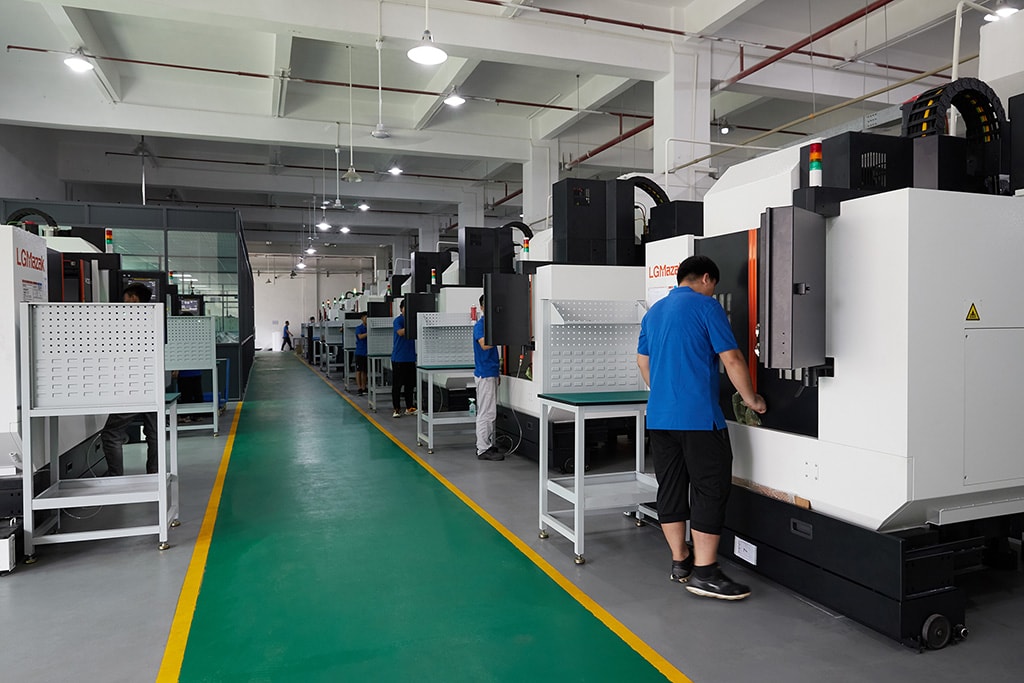
Precision machining from China is bought in two currencies: the price on the quote and the evidence behind it. The price is the part of the deal everyone negotiates; the evidence is the part that decides whether the price was real. A precision quote from an unverified supplier is a number without a floor under it — the machine list unconfirmed, the certificate numbers unchecked, the tolerance unmeasured — and every missing piece of evidence becomes your cost later, at incoming inspection or in the field.
What does precision machining from China actually cost — line by line?
Every honest quote is the same five lines, and on an offshore order the fifth line is the one that makes the price trustworthy from a distance. The inspection and documentation are not overhead; they are the bridge between the supplier's CMM and your incoming inspection.
| Line item | What it pays for | What moves it |
|---|---|---|
| Material stock | The bar, plate, or billet at the grade on the drawing | Grade, temper, and traceable certified lots |
| Machining time | Spindle minutes to remove material and hold features | Feature count, material toughness, and tolerance per feature |
| Setup and programming | Fixturing, toolpath work, first-piece prove-out | A one-time cost per order that dominates small quantities |
| Finishing and special processes | Anodizing, passivation, plating, heat treatment | Metal-specific and dimension-changing; a line of its own |
| Inspection and documentation | CMM time, dimensional reports, material certificates | Each tight feature and GD&T category adds measurement and proof |
No honest supplier quotes a price without a drawing, and no careful buyer pays one without a plan for the evidence. The structure is the same at every shop; the differences show up in which lines are listed, which are absorbed, and which can survive an audit.
How much does the tolerance on the drawing move the price?
Machining cost is nonlinear in tolerance. Moving a feature from ±0.1 mm to ±0.003 mm can more than double the price, because the machine, the setups, the tooling, and the inspection method all change at once. Dropping a critical surface to ±0.002 mm moves it to grinding, a separate process family. On the floor behind this site, milling and turning hold ±0.003 mm on critical features and precision grinding reaches ±0.002 mm, with process capability tracked at Ppk ≥ 1.67 at the initial study on key characteristics and Cpk ≥ 1.33 on general characteristics. Capability is reported per characteristic: every report names the feature, its tolerance band, the sample size, the sigma method, and the study window. And critical geometry CMM-verified. Reserve the tight band for the features that engage another part, leave the rest on the general block, and read the quote to see whether inspection is a line. On an offshore order that line is everything: the CMM report is the only part of the tolerance you can audit from your desk, so ask what will be measured, with what instrument, and what the report will contain before you compare totals. Ask also to see a sample report from a completed job in a similar material, and a Cpk chart that shows the process is inside the band rather than scraping past it — Cpk predicts scrap before you order, which is why it belongs in the audit as much as in the quote.
Which material should a China precision budget assume?
Material moves the price twice: once as stock, once at the spindle. Aluminum 6061 is the least expensive precision metal to machine and the default for housings and brackets; 7075-T6 adds strength at a higher mill price. Free-machining grades such as 303 stainless or 12L14 steel keep turned parts economical, while tougher grades — 304, 316, and titanium — cut slower, wear tools, and push the cycle out. On a China order the material line carries a verification sub-cost that belongs in the budget: confirm the supplier checks incoming stock against its mill certificate, because a substituted alloy passes every dimension and fails in service, and the certificate is the only proof you can inspect from a distance. And if the part needs a finish, name it on the first quote — anodizing grows the dimension, so the allowance has to be machined in, and a part reviewed with its finish is a part whose final size does not surprise you at the port. The finish also decides which supplier can run the job without a handoff: a shop that owns its finishing can name the coating, the allowance, and the partner, while one that folds the step into a vague "included" has given you a handoff where quality and schedule both slip.
How do quantity and program stage change the unit price?
The one-time lines — setup, programming, fixturing, first-article inspection — are fixed whether you order one part or a thousand, so a prototype carries them all on one piece. Minimum order here is one piece, with prototypes on the same machines and tolerances as production, so the prototype price is the honest anchor and the production tier shows the fixed lines spread thin. Lead time tracks the same process count — roughly 3 days for simple parts, 7 days for standard parts, and up to 30 days for complex parts with many steps or finishing — and when the date and the price come from different process counts, the quote is describing two different parts. Between the prototype and the production run sits the bridge order, ten to fifty parts that exercise the fixtures, the measurement loop, and the documentation before you commit volume; a supplier that quotes all three tiers is showing you the whole cost curve instead of its two ends. The iteration loop is part of the same curve: every design revision triggers a new first-article check and a new record, and a supplier that prices the revision loop as its own line is giving you the real cost of learning rather than hiding it in the margin. The documentation set — material certificate, XRF record, CMM report — behaves the same way: it is a fixed cost per program that weighs on the first article and disappears into the run, so a supplier that itemizes it on the prototype is showing you the real cost of the record you will need for every revision.
What should an audit-ready quote itemize so you can compare suppliers?
A quote you can compare is also a quote you can audit. Make sure each supplier shows the machine list that will run the job, the tolerance and GD&T it will actually hold per feature, the measurement method and what the report will contain, the material grade and how the lot is verified, the finishing included and who performs it, and the quantity tier with prototype and production separated. Then add the offshore layer: the certificate numbers to check with the registrar, the legal entity on the contract, the Incoterms and freight, and the documentation that ships with the parts. A supplier that cannot name its machines, its instruments, or its certificates is not offering a lower price for the same part — it is offering a part without the proof, and the proof is what makes an offshore price real. The legal entity is part of that proof: confirm the entity on the quote matches the entity on the contract and the commercial invoice, and check its registration number, because a supplier you cannot contract with cleanly is a price you cannot collect on if the parts do not land.
How do you build a 2026 China-precision budget you can defend?
Build the budget in the same order you would run the audit, because the two are the same discipline.
- Verify the supplier before you budget against its price. Run the audit checklist on this site — a real factory or a trading desk, a countable machine list, verifiable certificate numbers, a named metrology bench, material traceability. A price from an unverified supplier is a number you cannot defend.
- Get the DFM review before you fix the number. Send the drawing and ask the supplier to flag the features that are tighter than the function needs and the finishing that will change the final size. Fix the drawing first; then budget the fixed drawing, not the first draft.
- Quote prototype, bridge, and production on the same page — with the terms. One piece at MOQ 1 anchors the fixed costs; the bridge prices the transition; the production tier shows the fixed lines at volume. Confirm the Incoterms, the freight, and the payment milestones before you approve the number, so the price on the quote is the price that lands. Confirm the capacity behind the date too: a floor with 100+ machines under one roof can schedule a prototype without displacing a production program, which is what keeps the 3-day tier and its price real instead of theoretical.
Keep the closing rule in front of you: the cheapest precision quote from China is rarely the cheapest part in service, because the evidence you skip at purchase becomes the cost you carry at inspection. Price the part and the proof together, and the 2026 budget you build will survive the audit you should run before you wire the deposit.
Frequently Asked Questions
How much does precision machining from China cost in 2026?
No honest supplier quotes a price without a drawing, because the price is set by the material grade, the number of tight features, the process count, the quantity, and the freight and terms. A simple 6061 part at production quantity sits low; a complex part in a tough grade with many GD&T callouts at prototype quantity sits far higher.
Why do quotes from China vary so much between suppliers?
Quotes differ for honest reasons — inspection scope, process assumptions, finishing path — and for less honest ones, when the evidence is omitted rather than itemized. Compare the scopes and audit the claims; a quote that cannot survive an audit is a quote that will cost you later. A quote that prices the documentation and the revision loop as lines is showing you its real cost structure; one that absorbs them is hiding the difference between the first article and the last.
What tolerance can you hold, and what does specifying it cost?
Milling and turning hold ±0.003 mm on critical features; precision grinding reaches ±0.002 mm for sealing and seating surfaces, with process capability tracked at Ppk ≥ 1.67 initial under SPC and critical geometry CMM-verified. Cost rises with each step because the machine, the setups, the tooling, and the inspection method all change.
What is the minimum order for a first precision part?
One piece. Prototypes run on the same machines and tolerances as production, with first-article inspection, so you can validate the design and the documentation before committing volume.
What is your lead time, and does it affect the price?
Lead time tracks process count: roughly 3 days for simple parts, 7 days for standard parts, and up to 30 days for complex parts with many steps or finishing. Price and lead time should come from the same process count; a quote that prices one and dates another should be questioned.
Which materials do you machine, and which is cheapest?
Aluminum 6061 and 7075, stainless 303, 304, 316, and 17-4PH, carbon and alloy steel, brass, copper, titanium, and engineering plastics including PEEK and POM/Delrin. Aluminum 6061 and the free-machining grades are the least expensive to machine. Every lot is verified against its mill certificate before cutting.
What evidence should an auditor request in writing before paying?
The certificate numbers to check with the registrar, a sample dimensional report from a named CMM, the material certificates with their lot records, and the Incoterms and payment milestones in writing. The audit checklist on this site is the full list; run it before you wire the deposit. Every item on that list has a price attached somewhere — in the quote, in your incoming inspection, or in the field — so price the ones you can see and audit the rest.
Want a quote that survives your audit?
Email the STEP or IGES model, the material grade, and the toleranced 2D drawing to [email protected] or call +86 13126536955. You will get a design-for-manufacturing review, an itemized quote with the tiers on the same page, and the certificate numbers and sample documentation you can audit before you pay.