
Precision Machining China vs Alternatives: Which Material-Process Pair Wins, and How You Audit It
Choosing between machining from solid stock and a forging, casting, extrusion, molding, or printing route is an audit question as much as an engineering one. Every pair — material plus forming process — carries a different supply chain, and the chain decides what buyers must verify before you pay. A machined-from-stock part has one supplier and one seam of evidence. A forged or cast part has two suppliers and a seam between them where substitution and quality loss hide. This guide compares the pairs head to head, shows which quantity and load each one wins, and frames every choice as the verification burden it actually creates.
Why is the material-process pair the real unit of the sourcing decision?
A "machined part versus a cast part" comparison is incomplete, because the material and the process are inseparable. Every material carries a short list of forming routes that suit it, and the route changes the material's structure, strength, and cost. Steel can be forged for fatigue, cast for complex shape, or machined from bar for speed. Aluminum can be die-cast at volume or machined from plate at low volume. An engineering plastic is molded or machined, not forged. The pair, not the process alone, is what you are choosing.
The reason the pair matters to a sourcing audit is the chain. Machining from solid stock is a single-supplier route: the same floor cuts the material, verifies it, measures it, and ships it. Forging, casting, and molding add a second supplier who makes the starting body, and a seam between the two where the grade certificate, the porosity record, and the accountability must cross. Every seam is a place where a bad lot hides and a place buyers must audit.
That is why this guide frames each alternative by its verification burden. The engineering question — does the pair carry the load at the right quantity — comes first. The audit question — can you verify what the pair delivered — decides whether the choice is safe from a remote buyer's desk. When a pair wins on engineering but cannot be verified, it is not actually a win.
When does machining from solid stock win the pair, and the audit?
Machining from solid stock wins whenever the quantity is low, the tolerance is tight, or the design is still moving. It has no tooling to build, so the MOQ of one piece is real — a prototype and a short run cost the same to start. It holds the tightest bands, because ±0.003 mm milling and turning and ±0.002 mm grinding are cutting-and-measuring jobs no forming process can match on functional surfaces. And it changes with a new program, not a new die, which makes iteration cheap.
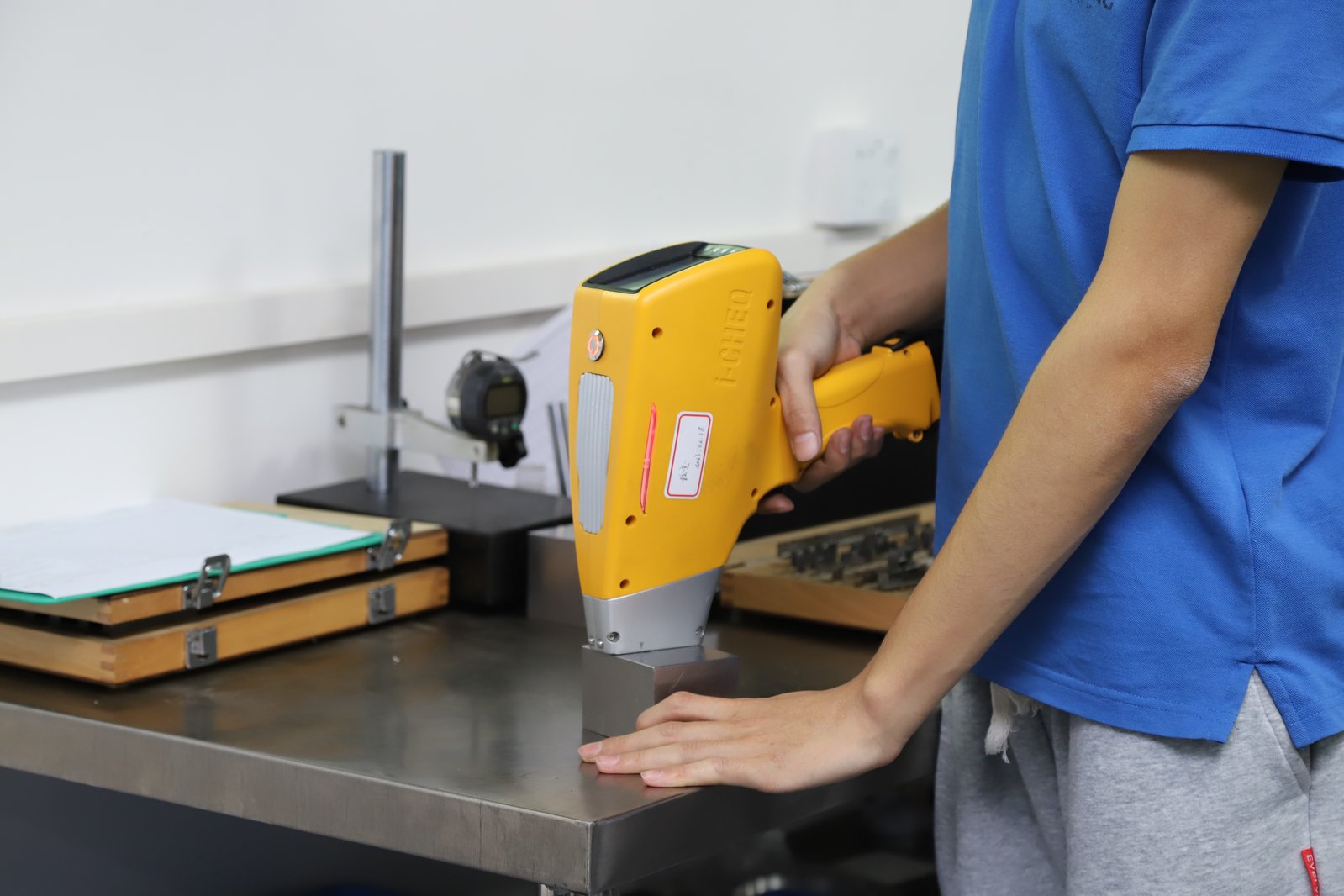
It also wins the audit, because the evidence chain is the shortest of any pair. One supplier cuts the material, XRF-verifies the incoming lot against its mill certificate, measures the part on a CMM, and ships the dimensional report. There is no second supplier and no seam. For a remote buyer, that single-seam chain is the most verifiable route on this list, which is why machining from solid stock is the default recommendation for anyone who cannot stand on a foundry floor.
The pair loses at high volume on simple geometry that a forming process can make cheaply. When the shape is a constant extrusion or a mold-friendly plastic and the quantity runs into the tens of thousands, the per-piece cost of machining stops being competitive. That is the boundary where a different starting body earns its tooling, and its extra audit burden.
When does a forged blank beat solid stock, and what does the seam cost?
Forging wins on fatigue, and only at volume. Hammering or pressing hot metal aligns the grain to follow the part's shape, so a forged connecting rod or structural arm carries far better life under repeated load than the same shape cut from bar. If your part sees millions of cycles — a suspension arm, a crankshaft, a loaded fitting — forging is the engineering answer, not a cost option.
The cost of forging is the chain, and the chain is what buyers must audit. A forged blank comes from a forge shop as a near-net shape, still holding loose tolerances, and then has to be machined on every functional surface. In a China sourcing context that means two suppliers, a transport leg, a grade certificate that must cross the seam, and a verification question at each end: did the forge ship the grade it certified, and did the machining shop verify what it received on intake?
The audit for a forging therefore has two checklists. The first covers the machining shop you already know how to audit — machines, certificates, CMM. The second covers the forge seam: the forge shop's name, the grade certificate on the blanks, and the machining shop's intake verification. If either half is vague, the forging pair is unverifiable, and an unverifiable forging is a fatigue part with a hole in its evidence.
When does a cast body earn its place, and where does it complicate the audit?
Casting wins on complex internal geometry at volume. A part with cored passages, a complex exterior that would waste most of a billet, or a shape that is simply not machinable from solid is a casting candidate — a housing, a pump body, a manifold. The casting brings the body near final form, and machining finishes the faces that mate, seal, or hold a bearing.
The problems casting introduces are porosity and weaker structure. A cast body carries porosity, which is the enemy of sealing and of fine finish. Castings are also weaker than wrought stock of the same nominal alloy, because the grain was not worked. The practical result: a casting that must seal or carry load needs the casting plus finish machining plus pressure testing or X-ray where porosity would be fatal. Each of those is a verification point.
The audit for a casting is the most demanding on this list. You are verifying across a foundry seam: the casting grade, the heat treatment, and the porosity record from the foundry, plus the machining shop's intake check and its finished-part measurement. A casting that looks right and leaks was never verified, and a remote buyer cannot discover that at the dock. Casting is the right pair when the geometry demands it and the volume justifies the pattern, and when you can audit both ends of the seam.
When does extrusion win, and what does it ask you to verify?
Extrusion wins for long, constant-cross-section parts in metals that push well. A rail, a channel, a heat-sink profile, or a bar-shaped component is pushed through a die once to full length at near-net section, and machining cuts only the features and ends. Aluminum extrudes beautifully, which is where the pair earns most of its keep; steel, stainless, and titanium extrude with tighter shape limits and larger minimums.
The deal breaks on any departure from a constant section. A boss, a flange, a varying wall, or a mid-length feature wider than the profile ends the extrusion's advantage, because you are back to cutting metal away, and paying twice for a profile you cannot use. Extrusions also carry a minimum mill run and lock the cross-section, so a design change means a new die and a new minimum.
The audit for an extrusion is lighter than for a forging or casting, because the profile mill is a specialist that ships a standard product. What you verify is the alloy and temper of the profile lot, that the machining shop confirmed it on intake, and that the finish machining removed the extruded surface where it matters. The seam exists, but it is narrower — the profile mill certifies the section, and the machining shop certifies the features.
Which parts are better born molded or printed, and what do they ask you to verify?
Injection molding wins when three conditions hold at once: the part is plastic, the quantity is high enough to amortize the mold, and the geometry is mold-friendly. Engineering plastics machine well from stock at low volume, but at tens of thousands of units a molded part falls below machining's per-piece cost. The cost of molding is the mold — weeks of lead time, a tooling investment, and a design that must freeze before the tool is cut.
Additive manufacturing wins the opposite corner: very low volume and geometry machining cannot make, such as internal lattices and conformal channels. But printing produces neither wrought-stock properties nor fine surfaces nor tight tolerances, so a printed body is almost always a near-net body that still needs machining where it mates or seals.
Both routes ask you to verify the starting body's material and the machining that follows. For a molded part, the base resin certificate and the molded-material properties are the seam. For a printed part, the printed-material certificate stands in for the mill certificate that a machined-from-stock part would carry. In both cases the functional surfaces are machined and measured, which is the part of the chain you already know how to audit. The question is whether the base material can be verified as easily as bar stock, and for exotic printed or molded materials, the answer is often no.
How do you read the pair for your part, and its audit burden?
Run your part down this list in order, and the pair usually selects itself:
- Prototype, changing design, or low volume → machine from solid stock. No tooling, MOQ of one, tightest tolerances, single-supplier chain, easiest audit.
- Cyclic load on a structural part at high volume → forged blank + finish machining. The grain earns the two-stage chain only at volume, and buyers must audit both stages.
- Complex internal passages at high volume → cast body + finish machining. Geometry wins; budget for porosity verification across the foundry seam.
- Long, constant cross-section, stable design → extruded section + finish machining. Cheapest per meter when the section never varies; the seam is narrow.
- Plastic at high volume with mold-friendly geometry → molded part. The mold amortizes; verify the base resin and the machined faces.
- Internal lattices or conformal channels at very low volume → printed near-net + finish machining. Verify the printed material where no mill certificate exists.
- Everything else → machine from solid stock. The pair with the most evidence and the shortest chain.
The columns that separate the pairs are quantity, load, geometry, and auditability. Fill the first three in honestly and the pair narrows itself; when two pairs remain, choose the one you can verify from your desk. The factory's guide to auditing a supplier before you wire the deposit gives you the checklist that works for the machining half of any pair, and the services page shows which processes run in-house.
Which mistakes repeat when buyers compare machining with alternatives?
Four errors account for most expensive pair decisions, and all four are visible in advance:
- Comparing processes instead of pairs. "Casting is cheaper" ignores that your part is a stainless casting — expensive, porous, and still needing machining. Compare the whole pair, material included.
- Ignoring the finish machining. Most alternatives still end at a machining step. Quoting a forging or casting as "the part" and forgetting the finish machining understates both cost and lead time.
- Skipping the seam audit. A forged or cast pair has a seam between two suppliers that needs its own verification. The cheapest quote is often the one with the least verification attached.
- Choosing an unverifiable pair from a remote desk. A pair you cannot audit — no forge name, no porosity record, no base-material certificate — is a pair you cannot trust, whatever its engineering merits.
The buyer who names the pair, scores the quantity and load honestly, and audits the seam between suppliers gets a part that is strong, on tolerance, and on schedule. The buyer who skips the seam gets a story. That is the difference the audit makes.
Frequently Asked Questions
Is CNC machining more expensive than casting or forging?
Not necessarily. Below the break-even quantity — where the die or mold never pays back — machining from solid stock is usually cheaper, because there is no tooling to build. The honest comparison includes the finish machining and verification that forming processes still need, which narrows the gap further.
How do I audit a forged or cast part from a remote desk?
You audit both ends of the seam. For the machining shop, run the standard checklist — machines, certificates, CMM evidence. For the forming seam, ask the forge or foundry's name, the grade certificate on the blanks or castings, and what the machining shop verified on intake. If either half is vague, the pair is unverifiable.
Which material-process pair is best for a prototype?
Machining from solid stock, because it has no tooling cost, a one-piece MOQ, the tightest tolerances, and the shortest, most verifiable chain. Prototypes exist to test a design, and machining lets you change it without paying for a new die.
Can a plastic part be machined from stock instead of molded?
Yes. Engineering plastics such as PEEK, PTFE, POM, and nylon machine well from stock, which suits one-offs and short runs. Molding wins only at high quantity, where the mold's cost spreads across tens of thousands of units and the per-piece price falls below machining's.
When should I choose 3D printing over CNC machining?
Printing wins at very low volume and for geometry machining cannot make — internal lattices and conformal channels. It loses on material properties, surface finish, and tolerance, so a printed part usually still needs machining where it mates or seals.
Does the material limit which alternative process I can use?
Yes. Steel can be forged, cast, extruded, or machined; aluminum can be cast, extruded, or machined; an engineering plastic is molded or machined, not forged. Name the material first and the viable routes narrow themselves, which is why the decision is always a material-process pair.
How do I verify the material in a China-sourced part?
Ask for XRF verification against the mill certificate on the incoming lot, and for the material certificate to ship with the parts. When your pair includes a forged or cast blank, ask what the machining shop verified at the seam, that is where a substitution most often hides.
Not sure which material-process pair, or how to audit it?
Send the drawing, the material, the load case, and the annual quantity to [email protected] or call +86 13126536955. You will get a design-for-manufacturing review that names the starting body, the finish machining, and the evidence that proves the pair, so the part you receive is the pair you chose, and the audit is already done.