
Precision Machining China Lead Times: What Drives Them and How to Plan
A lead time from a precision machining shop in China deserves the same skepticism as a tolerance claim: verify it before you build on it. The number is not a promise a supplier volunteers — it is the output of a schedule, and a schedule is something an auditor can check. The realistic range runs roughly 3 days for simple parts, 7 days for standard work, and up to 30 days for complex parts with many steps or surface finishing, and every step inside that range has a queue behind it. It then shows how to plan prototypes, batches, and reorders so the date you are quoted is the date your production can use.
Why should you audit a lead time the way you audit a machine list?
Buyers who source precision parts from China run a checklist before they pay: a live video walk-through, a machine list with brand and count, certificate numbers, a sample CMM report, and a material traceability chain. A lead time deserves a sixth check, because it is the one claim on a quote that fails after money has moved. A machine list can be counted on a walk-through; a certificate can be checked with a registrar; a lead time can only be held by the schedule behind it. So read the date the way you read the rest of the quote — as a claim that should be explainable in terms of material, machine, finishing, and inspection.
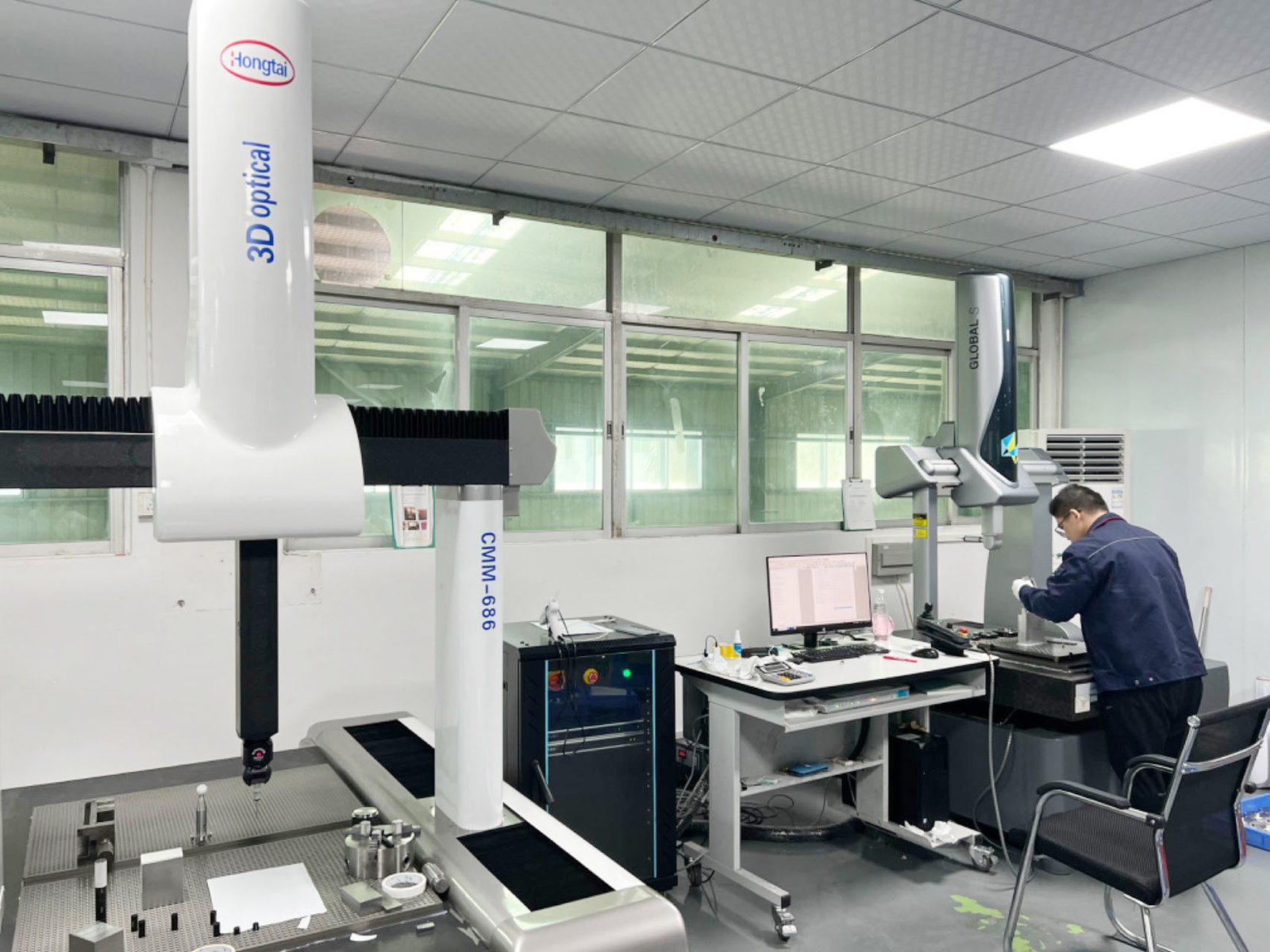
The audit question is not how many machines you have. It is which machine runs my part, and when. The floor behind that answer holds 100+ production machines: 50+ three-axis, 20+ four-axis, and 20+ five-axis machining centers, plus 25+ CNC lathes and 7+ grinders across a 6,800 m² site. That scale matters for one reason: it lets a job route around a bottleneck instead of waiting behind one. A shop that can name the machine, the queue, and the finish step for your part is describing a real schedule. One that answers with a single number is describing a hope.
What does a realistic lead time look like by complexity?
Lead time follows part complexity and the number of process steps, not the quantity on the order. The three bands that hold across precision machining from China:
- Simple parts — about 3 days. A bracket, a plate, a bushing: one material, one or two setups, standard finish. The schedule is a stock check, a short program, a cut, and an inspection.
- Standard parts — about 7 days. Multiple operations, moderate feature counts, general tolerances. The part may need a second setup or a light surface pass, and the inspection burden on the drawing is part of the calendar.
- Complex parts — about 30 days. Ten to twenty process steps, tight tolerances across several features, or a surface treatment that leaves the machining floor. When finishing or heat treatment goes to a partner, the part joins another shop's batch schedule before it returns for final inspection, and that is where the long end of the range lives.
Ordering more pieces barely moves the date, because the routing is written once and the machine repeats it. Adding process steps moves it a lot. The same drawing with a hard anodize and tight callouts on every surface is a different part for scheduling purposes.
Which queues sit behind a China precision-machining date?
A quoted lead time is the sum of four queues, and the delay hides in whichever one your part happens to need:
- Material availability. Standard alloys in common bar and plate sizes are an ordinary purchase in a machining hub like Dongguan; an exotic grade or an odd dimension waits on its own supply chain. Every incoming lot is XRF-checked against its mill certificate before it reaches a machine, so the material queue includes a verification step that protects the schedule from a substituted lot discovered after cutting.
- Machine capacity. Capacity is booked in order, and a complex job waits for the machine class that can hold it. A five-axis contour belongs on one center, a long turning job on a lathe with the right envelope, and a high-tolerance feature on the machine whose process control is proven. A machine list with counts is what lets you confirm the shop can actually route around its bottlenecks.
- Finishing and heat treatment. Anodizing, plating, powder coating, and heat treatment run through named partners on batch schedules. The part leaves the machining queue, waits on the finish process, and returns for final inspection. A supplier that names the partner and the batch calendar is describing the real chain; a vague answer is hiding the longest wait in the schedule.
- Inspection and approval. A first article is machined and measured before volume is released, production runs ship with CMM reports and SPC charts, and every critical dimension carries its evidence. Those gates sit between "machined" and "shippable," and a part that carries them carries their time.
This is why the same shop quotes three days for one drawing and thirty for another. When the date matters to you, ask which queues your part enters, and write the answer into your audit notes.
How does sourcing from China change the planning calendar?
Machining lead time is only part of the calendar when the factory is in China; the freight leg is the rest. The factory sits in Hengli, Dongguan, in a supply-chain-rich region where material and finishing move fast and export lanes to the ports are routine. For an overseas buyer, that geography shows up as shorter, more predictable machining dates, but the delivery date still adds the transit and the paperwork that happen after the parts are documented.
Plan the two dates separately. The machining date is when the parts are cut, measured, and packed with their reports; the delivery date adds the freight leg. Prototypes that must move fast fly; production batches ride a schedule that tolerates ocean transit. Asking for "the lead time" without separating machining from freight invites a number that means different things to each side of the transaction.
How should you plan prototypes, batches, and reorders around the schedule?
Planning starts with what the order is for. There is no minimum order — work starts at one piece — and a prototype runs through the same process and the same inspection as production, which makes it an honest forecast of the production part.
- A prototype. A single piece to validate design, material, and documentation before committing volume. Its lead time is mostly the queue for its few operations.
- A first-article-then-batch sequence. The fastest route to volume is not one large order placed under pressure. Approve the first article, then release the batch against the proven program. That converts one long, uncertain schedule into two shorter, predictable ones.
- A production batch. Once the program exists, the batch date is set by machine and finishing capacity. Release the batch before the prototype is approved — rather than after — and you close the gap, because suppliers schedule from the release date.
- A reorder. A standing release lets the shop reserve capacity and buy material against the forecast. Recurring buyers get shorter effective lead times because their work is already on the schedule.
The planning rule that saves the most calendar: send the file early, state the target date, and let the supplier say which step makes the date what it is. A target that looks impossible for a thirty-day part becomes reachable once it is split into "prototype this week, batch next month."
What can compress a precision machining China lead time?
The levers that shorten a date are mostly information and standardization, and each one is something you control before the quote:
- A complete file with the grade and the finish named. A quote request with the material grade, finish line, and target date attached gets answered normally within one business day, with a design-for-manufacturing review that flags any dimension that cannot be held. Every missing detail adds a round-trip, and every round-trip adds days.
- A finish decided at quote time. Naming the finish when you send the file beats deciding it after machining, because a late finish decision is how rework and a second lead time begin.
- Standard grades and general tolerance classes. A drawing that cites ISO 2768 for non-critical features and reserves tight callouts for the features that mate keeps the inspection burden proportionate. Over-tolerancing a non-functional shoulder slows the run and adds documentation the part never needed.
- Fewer process steps. As-machined parts with deburring-only finishing stay in the short band. Every operation added to the routing adds a setup, a queue, and an inspection point.
The honest rule on compression is that rush has a price and a condition. A simple part on a stocked material can move into an open machine slot, and a supplier that can check its schedule and answer the same day is offering a real option. A supplier that promises a short date on a complex, finished part without explaining which step is compressed is offering risk.
Which questions should you put to the supplier, and to the quote?
A delivery date is a commitment, and commitments come from schedules. These questions separate a date you can plan around from a number that sounds good:
- "Which machine runs my part, and when is it free?" A machine list with counts makes this answer checkable on a walk-through.
- "Which queues does my part sit in — material, machine, finishing, or inspection?" Naming the queues shows the routing behind the date.
- "What documents ship with the order?" A first-article report, CMM reports, SPC charts, and material verification are named, not promised.
- "Is this date the machining date or the delivery date?" Separating the ready date from the freight leg gives you a calendar you can actually plan.
- "What would shorten it?" If the answer is "confirm the finish" or "approve the drawing," the date was waiting on decisions, not on the machine.
Run the same questions against the quote itself, the way this site's audit method treats every claim as evidence to check. The broader audit checklist that surrounds the schedule — verifying the machine list, the certificate numbers, and the dimensional evidence behind any precision supplier — is assembled in the main precision machining China audit guide. The dimensional evidence that makes a schedule honest is explained in the quality assurance guide.
Frequently Asked Questions
How long does precision machining from China take?
About 3 days for simple parts, 7 days for standard parts, and about 30 days for complex parts with many steps or surface finishing. The range follows process steps, and a part outside it gets a conversation instead of a number.
Does ordering more parts extend the lead time?
Barely. Lead time follows the routing — the process steps and the queues they enter — and the routing does not change with quantity. More pieces extend machine time but not the queue count.
What is the difference between the machining date and the delivery date?
The machining date is when the parts are cut, measured, and packed with their reports in Dongguan. The delivery date adds the freight leg to your door. Separate them when you plan, because they are different commitments.
Can I get a prototype before committing to a production batch?
Yes. There is no minimum order, and a prototype runs on the same process and inspection as production. Approve the first article first, then release the batch against the proven program, and one long schedule becomes two short ones.
How fast will a quote come back from a China precision machine shop?
Quote requests are answered normally within one business day, with a design-for-manufacturing review attached that flags any dimension that cannot be held, so the first document you receive is already part of the audit.
Do surface finishing and heat treatment add time?
They add a queue. Finishing runs through named partners on batch schedules, so a part that leaves the machining floor joins another shop's calendar before it returns for final inspection. That is where the long end of the lead-time range lives.
How can I verify a quoted lead time before I pay?
Ask which queues your part enters and which machine runs it, request the schedule assumptions in writing, and confirm the documents that will ship with the order. A supplier that can answer in terms of material, machine, finishing, and inspection is describing a real schedule.
Need a precision machining China date you can plan around, and audit?
Send your drawing, grade, and target date to [email protected] or call +86 13126536955. You will get a quote that separates the machining date from the freight leg, names the queues your part enters, and includes the design-for-manufacturing review this site's audit method expects.